The story and science behind the dish · recipe above ↑
Torched Gingerbread and Amarena Black Cherry Bourbon Sour: The Speakeasy Classic, Explained
Alcohol & Responsible Service Notice: This craft holiday beverage contains alcohol (Small-Batch Kentucky Straight Bourbon Whiskey & Amarena Cherry Liqueur, ~16.5% ABV: 60 ml (2 oz) Small-Batch Kentucky Straight Bourbon Whiskey (45% ABV), 15 ml (0.5 oz) Italian Amarena Black Cherry Liqueur (24% ABV)). Intended strictly for adults of legal drinking age (21+ in the United States; 18+/19+ where applicable). Legal drinking age only. Please drink responsibly; for alcohol-free service, substitute zero-proof oak-spiced spirit alternatives at a 1:1 ratio.
Why infuse winter gingerbread and Italian Amarena cherries into a whiskey sour?
The whiskey sour stands among the foundational drinks of American cocktail culture, tracing its origins to the mid-nineteenth century as a balance of spirit, citrus juice, and sweetener. While a summer whiskey sour celebrates bright lemon acidity and crisp bourbon grain, a holiday interpretation demands deeper, warmer dimensions of spice, roasted oak, and dark fruit.
Infusing the classic sour with spiced gingerbread molasses and rich Italian Amarena black cherries transforms the cocktail into an opulent December dessert drink. Spiced gingerbread syrup introduces warming notes of ginger, cinnamon, clove, and nutmeg, which harmonize with the charred oak and caramel vanillins of Kentucky bourbon. The cocktail is topped with an unctuous swirl of dark-ruby Amarena cherry syrup and a caramelized spice sugar crust. For home mixologists interested in speakeasy techniques, a recognized holiday sour cocktail feature demonstrates how a torched egg-white foam cap insulates the chilled cocktail beneath while releasing toasted spice aromatics.
The chemistry of the egg white foam: why execute a dry shake?
The crowning glory of a classical Boston sour is its plush, velvety foam head. This luxurious texture is produced by egg white proteins—predominantly ovalbumin, ovotransferrin, and lysozyme—as described in culinary reference manuals on the whiskey sour and cocktail emulsions.
Raw egg white contains folded, tightly coiled globular proteins suspended in water. Shaking these proteins with high-proof alcohol and acidic lemon juice uncoils and denatures the protein chains. As air is whipped into the shaker, the hydrophobic ends of the denatured proteins align toward air pockets while the hydrophilic ends bond with the surrounding water, creating a stable network of tiny micro-bubbles.
Executing a "dry shake"—shaking all liquid ingredients with the egg white without ice first—allows the proteins to whip into a thick foam without the chilling interference of ice. A subsequent "wet shake" with heavy ice cubes rapidly chills and dilutes the cocktail while locking the foam structure in place.
| Emulsion Technique | Shaker Temperature | Bubble Size | Foam Thickness | Stability Over 10 Minutes |
|---|---|---|---|---|
| Two-Stage Dry & Wet Shake | Room temp then chilled | Microscopic, uniform | Dense 2 cm ivory cap | Very high (retains structure) |
| Reverse Dry Shake (Ice first, then dry) | Chilled throughout | Extremely fine bubbles | Extra-tall, whipped soufflé | High, but requires extra straining |
| Standard Single Wet Shake with Ice | Instantly cold | Large, uneven air pockets | Thin 5 mm loose foam | Low (dissipates within 4 minutes) |
| Aquafaba Plant-Based Shake | Chilled with ice | Fine, light bubbles | Moderate 1.5 cm foam | Good alternative for vegan guests |
Why pair small-batch Kentucky bourbon with Italian Amarena cherries?
American federal standards stipulate that authentic straight bourbon whiskey must be mashed from at least 51% corn and aged in new charred oak containers, as recorded in encyclopedic histories of bourbon whiskey distillation. Charring the interior of white oak barrels caramelizes wood hemicellulose into vanillin, furfural, and lactones, imbuing the spirit with its trademark notes of sweet corn, toasted oak, toffee, and spice.
Italian Amarena cherries, originating in the Emilia-Romagna region of Italy and celebrated through the century-old tradition of Amarena cherries, provide the ideal dark-fruit counterweight. Made from small, bitter-tart wild Prunus cerasus cherries preserved in a dense, dark-crimson sugar syrup with natural almond and stone-fruit nuances, they possess deep acidity that cuts through the robust 45% ABV (90 proof) grain heat of Kentucky bourbon.
How does the torched foam cap insulate the ice-cold cocktail?
One of the most striking physical aspects of this cocktail is the temperature dichotomy between the surface and the liquid beneath. The dense whipped egg-white micro-foam consists of millions of microscopic trapped air pockets. Air is an exceptionally poor conductor of heat, turning the foam layer into a highly efficient thermal insulator.
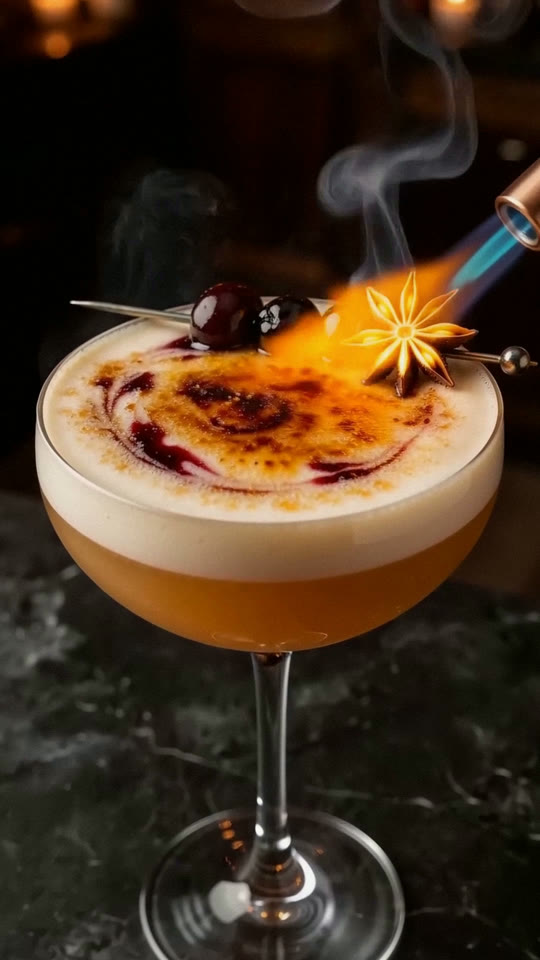
When a culinary butane torch is swept across the surface to caramelize spiced Demerara sugar and ignite a whole star anise, the intense 1,300 °C (2,370 °F) flame flash-caramelizes the surface sugars in two seconds without warming the cocktail underneath. The drink beneath remains chilled at -1 °C (30 °F), allowing the guest to sip frosty, citrus-bright bourbon through a warm, toasted gingerbread foam crust.
How to dry shake, strain, and torch the bourbon sour
Executing this cocktail requires clean separation of egg whites, a vigorous two-stage shake, and careful torch control.
- Chill a smooth crystal coupe glass by filling it with ice water while preparing the cocktail.
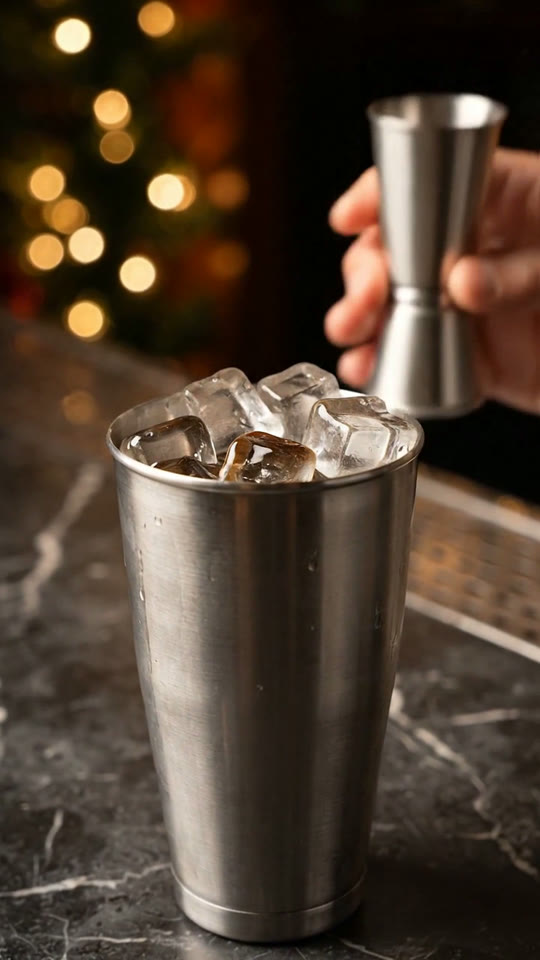
- In the small tin of a two-piece Boston cocktail shaker, combine 60 ml (2 oz) of small-batch Kentucky straight bourbon whiskey (45% ABV), 25 ml (0.85 oz) of freshly squeezed Meyer lemon juice, 20 ml (0.7 oz) of spiced gingerbread molasses syrup, and 30 ml of chilled pasteurized egg white (from one large egg).
- Seal the shaker tightly without adding any ice. Vigorously dry shake for 12 to 15 seconds to emulsify the egg white proteins into a dense, velvety micro-foam.
- Unseal the shaker, fill the large tin with large, solid clear ice cubes, reseal, and wet shake hard for another 10 to 12 seconds until the metal exterior frosts over completely.
- Empty the chilling water from the coupe glass and wipe the rim dry.
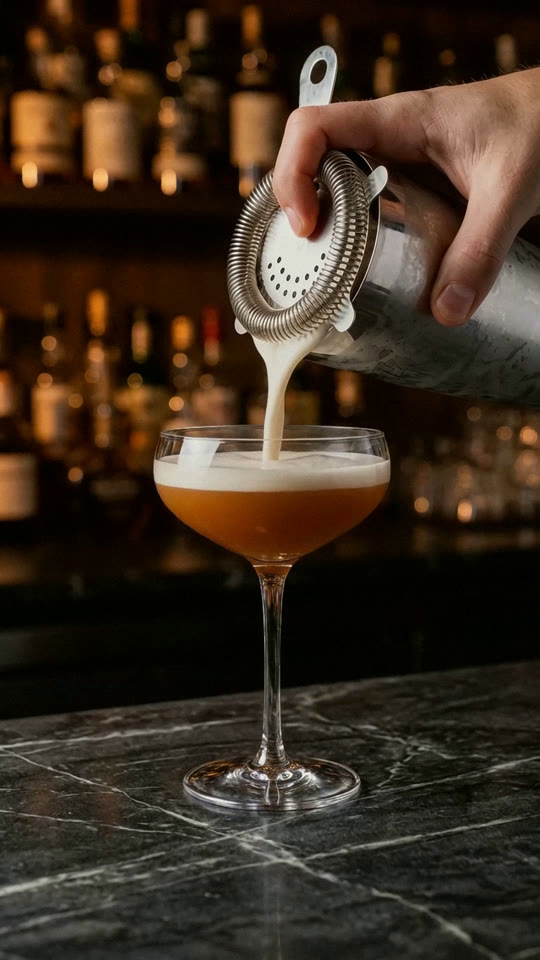
- Double strain the cocktail through a Hawthorne strainer and a fine mesh conical strainer into the chilled coupe to catch ice shards and create an ultra-smooth surface. The dense ivory foam cap will naturally rise to the top, occupying the upper 2 cm of the glass.
- Using the twisted handle of a bar spoon, gently drizzle 20 ml (0.7 oz) of dark-ruby Amarena cherry syrup across the foam cap in a spiral pattern.
- Dust the ivory foam lightly with 1 teaspoon of spiced Demerara sugar and rest a whole star anise and cinnamon stick gently in the center.
- Ignite a culinary butane torch on low flame. Hold the flame 5 cm above the coupe and sweep in a gentle circle for 2 to 3 seconds until the sugar bubbles and browns into a brulée crust and the star anise releases fragrant toasted spice smoke. Garnish with skewered Amarena cherries and serve.
Frequently asked questions
Can I substitute aquafaba for egg white?
Yes. Aquafaba—the liquid drained from canned chickpeas—is an excellent vegan substitute that mimics the foaming action of egg albumen. Use 30 ml (2 tablespoons) of chilled aquafaba in place of the egg white and follow the identical dry-shake and wet-shake procedure.
What causes a cocktail foam to smell eggy?
An unpleasant eggy aroma is caused by old or room-temperature eggs. Always use fresh, thoroughly chilled eggs and ensure the cocktail includes sufficient fresh citrus juice (at least 20 to 25 ml) and aromatic bitters or torch smoke, which naturally neutralize volatile sulfur compounds.
Can I make the spiced gingerbread syrup in advance?
Yes. Simmer equal parts water and dark brown sugar with freshly grated ginger, crushed cinnamon sticks, whole cloves, and black peppercorns for 10 minutes. Strain through a fine sieve and stir in a tablespoon of blackstrap molasses. Stored in a sealed glass bottle in the refrigerator, the syrup keeps fresh for up to one month.
How do you handle the torch safely near glassware?
Keep the torch flame on a low, controlled setting and never linger in one spot against the glass rim, as rapid localized heat expansion can crack delicate crystal. Sweep the flame steadily over the surface of the foam only, keeping the tip of the inner blue flame about 5 cm above the drink.
AI-created visuals. Culinary inspiration, not a complete cooking guide.